
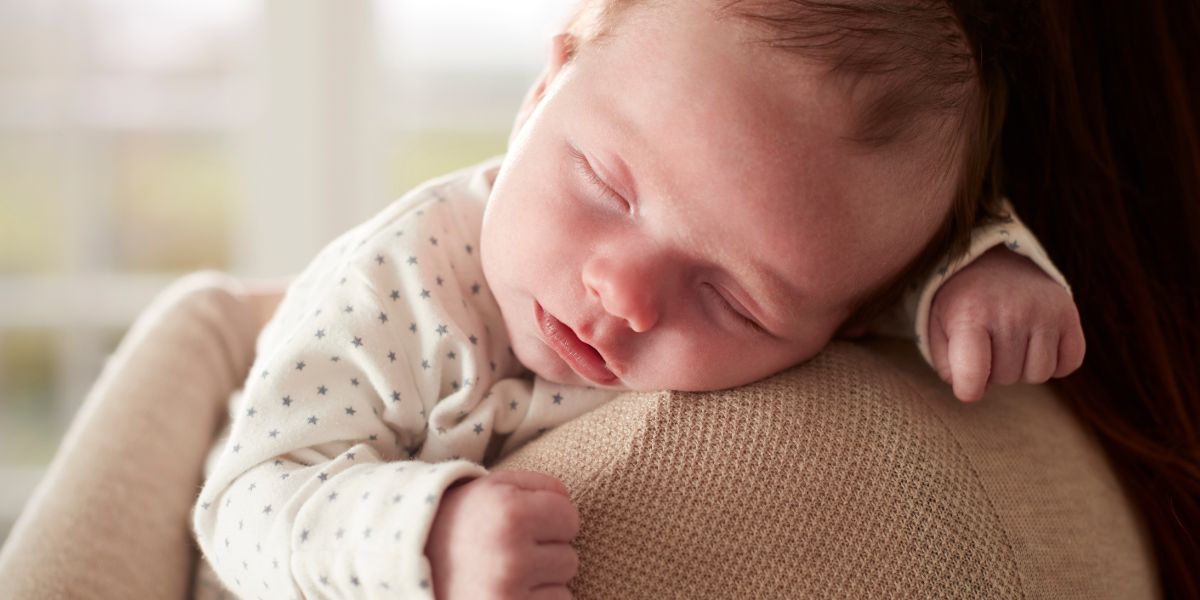
Your baby has now been in the world for four weeks and is no longer a newborn, but an infant. In the first four weeks, you and your baby got to know each other, initial fears have faded, and you can now interpret the most important signs of hunger, tiredness, and the need for closeness. In the second month, which includes weeks five to eight, there will be changes for your baby and in baby sleep again. We explain how baby sleep changes in the second month.
How does baby sleep work in the second month?
Baby sleep in the second month changes slightly from baby sleep in the first month: Your baby is now more active and has fewer sleep cycles, but the naps and awake phases last longer. On average, your baby still sleeps 14 to 17 hours a day. The longer awake phases invite more interaction with your baby: You can use this time individually, e.g., for reading, playing, and storytelling.
How often does the baby wake up at night?
As your baby's total sleep is distributed over the day and night and the sleep cycles become longer, your baby will still wake up at night, but perhaps not as often as in the first month. This can ensure that you and your baby are a bit more rested the next day. Nighttime breastfeeding or bottle feeding as well as diaper changes will still be necessary, as your baby's stomach is still small and requires regular new milk. By the way: Many parents notice a difference in the second month of the baby, often between the fifth and sixth week compared to the seventh and eighth week.
How does baby sleep develop in the 2nd month?
Baby sleep in the second month, like the baby sleep in the first month, is still characterized by several sleep cycles, which, however, become longer. In the second month, babies still have difficulty distinguishing between day and night. To help your baby learn, you can provide a bright and lively environment during the day and a calm, dark, and subdued environment at night. A small night light or a string of lights can make the night less frightening for your baby.
Tips for baby sleep in the second month: How can my baby sleep better?
When it comes to baby sleep, especially in the first weeks, there is no right or wrong. What matters is that your baby gets enough sleep to avoid overtiredness and overstimulation. But how can you support baby sleep in the second month? We show you how:
Develop a sleep routine for day and night
In the second month, your baby learns the difference between day and night by being accompanied to sleep through consistent routines. The day routine can differ from the evening/night routine.
Daytime sleep routine
During the day, you can carry your baby close to you in a baby wrap, lay them in the nursing pillow baby nest, on your belly, by your side, or on your arm. Perhaps you sing a little to your baby or let the music box play.

Evening and night sleep routine
For the evening, you can create a cozy sleep environment by darkening the sleep area and using only a small night light, as well as speaking calmly and in a subdued voice. If you are relaxed, so is your baby. By soothing, stroking, and cuddling, you help your baby with regulation and processing experiences. This will make it easier for them to fall asleep.
Baby sleep in the 2nd month: Conclusion
In the second month, your baby is no longer a newborn but an infant. Their sleep cycles become fewer but last longer – as do the awake phases. Your baby usually needs between 14 and 17 hours of sleep in the second month, which is distributed throughout the day. As your baby learns every day and is bombarded with many stimuli and impressions, you can support them in self-regulation through plenty of closeness, cuddling, and calmness, and ensure rest periods and relaxation.
Share