
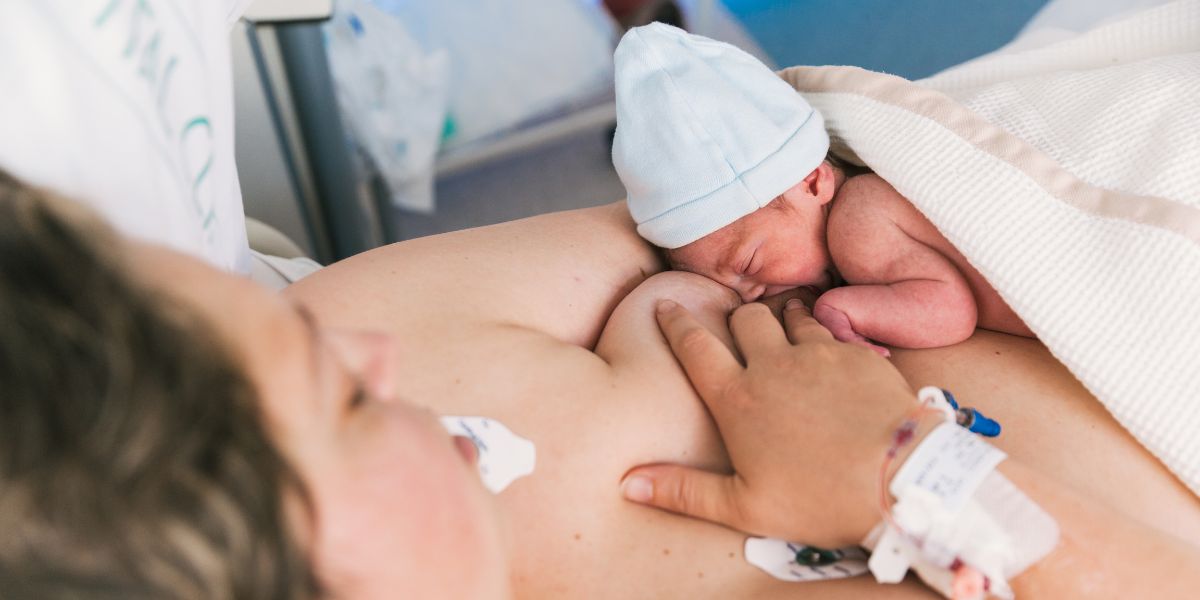
As soon as your baby is born, it already seeks your closeness. The warmth you provide, along with your heartbeat and skin that it feels, helps build trust. In this article, we explain what bonding means, why it is so important, what benefits it offers, and how you can bond after birth.
What does bonding after birth mean?
Bonding is an English term that translates to connection. This connection between parents and their child develops in the time after birth, as the newborn receives protection, warmth, love, and attention from its parents. Bonding begins with the first skin-to-skin contact (usually with mom, as the baby is placed on her belly after birth), creating the emotional bond between parent and child.
Why is the parent-child bond so important?
The close physical contact immediately after birth is important for sniffing each other, getting to know one another, and building and strengthening a bond. However, bonding in the first months of life not only contributes to well-being in the short term but also lays the foundation for the baby's long-term development. A good parent-child relationship is key to later relationship skills and the development of self-confidence. When babies feel secure, they build trust in other people and their environment, learning to be independent and self-assured later on.
The benefits of bonding for the baby
- Bonding promotes basic trust.
- Bonding is the start of a harmonious breastfeeding relationship, and the first latch often happens naturally.
- Intense skin contact, scent, heartbeat, and the mother's voice provide the baby with security and help it adapt better to the new environment.
- Early breastfeeding supplies the newborn with valuable nutrients, immune substances, and digestive enzymes.
- The baby has better temperature regulation and a calmer sleep.
The benefits of bonding for the mom
- Bonding boosts the mother's confidence in her maternal abilities.
- Milk production is stimulated, and pain perception is reduced.
- Bonding promotes emotional balance.
- The uterus's involution is stimulated by bonding and breastfeeding.
Bonding after birth: How does the bond with the child work?
- Skin contact: Through direct skin contact between mom and baby and dad and baby, your newborn feels particularly comfortable, secure, and safe. Your baby intensely perceives your scent and heartbeat when lying on your belly/chest.
- Warmth: Direct skin contact provides comforting warmth. However, make sure the room is not too cold. For added coziness, you can place your baby on your chest/belly and cover it with our soft baby knit blanket.
- Breastfeeding and bottle feeding: During breastfeeding and bottle feeding, the "cuddle hormone" oxytocin is released, which promotes bonding. At the same time, the baby receives security, closeness, and warmth during breastfeeding. If breastfeeding doesn't work for you, try to maintain a lot of skin contact while bottle feeding.
- Carrying: Infants are meant to be carried and cannot be spoiled by too much carrying and love. Carry your baby in your arms, in a carrier, or a wrap – always with as much skin contact as possible. Your baby can also sleep beside you at night, preferably until it is ready to sleep alone. Your closeness always gives your child a sense of security.
- Eye contact: After birth, babies cannot see far or particularly sharply, but over time they recognize their parents' faces. Early and regular eye contact fosters even more bonding.
- No sensory overload: In the first months, every day with your baby may seem the same, but for your baby, every day is different and exciting. Babies cannot yet regulate themselves and their emotions. Bonding helps your baby remain relaxed and calm. However, ensure a low-stimulation environment, such as a warm and quiet room with dimmed light.
Is breastfeeding also bonding?
Yes, especially during breastfeeding, you build a special connection with your baby. The hormone oxytocin, which is released during breastfeeding and cuddling, ensures that you both feel completely comfortable, safe, and connected. This also works with bottle feeding.
Can dad also participate in bonding after birth?
Absolutely! For both parents to build a close bond with their child, it is important that both spend a lot of time with it. Dad can implement all bonding opportunities that are also feasible for mom, except for breastfeeding. Especially in the time after birth, when mom is still exhausted and needs to rest, perhaps even having had a cesarean section and being limited in her movements, dad should take on much of the bonding time.
Can I catch up on bonding after birth?
It is often assumed that bonding only occurs in the first hours after birth. However, if there are complications during birth and the first contact with mom and dad is delayed, that is not a problem at all. The bonding process can take several months, allowing parents ample time for this phase. The birth can be re-experienced through a so-called bonding bath. In this process, the baby is bathed and then placed damp on the chest, covered with a warm blanket. In that moment, your baby can feel the arrival again.
Share